
North Carolina Furniture Making
From Local Logs to Furniture Made for Your Home
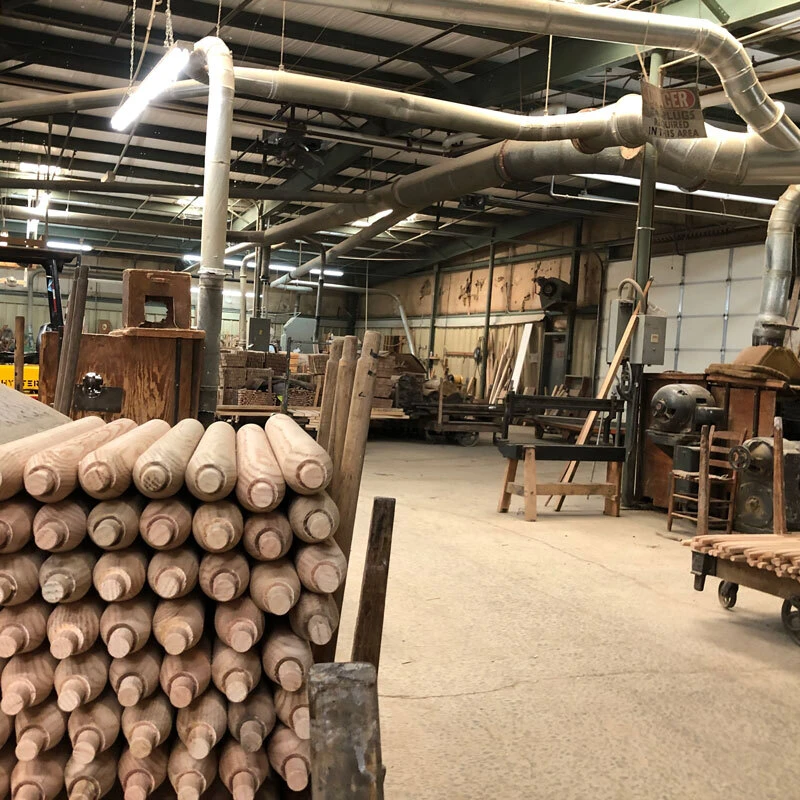
The Troutman chairs, rockers, stools, and tables we offer are made through a remarkably complete North Carolina production process. Local logs arrive at the factory, lumber is milled and dried on site, individual parts are shaped, traditional joints are assembled, and skilled hands guide the furniture toward its finished form.
A Rare American Process
Why Making So Much Under One Roof Matters
Troutman Chair Company brings oak logs from local loggers to its own North Carolina sawmill. The lumber is cut to dimension, stacked, dried, and prepared for furniture production on site. That level of vertical integration gives the manufacturer direct control over the wood before it becomes a chair part.
It also makes Troutman’s traditional joint construction possible. Moisture content is not simply reduced and forgotten. It is monitored and used intentionally so differently sized parts can tighten together as their moisture moves toward balance.
The Furniture Making Process
Seven Stages from Wood to Finished Furniture
Models differ in their exact parts, seating materials, and assembly requirements, but this sequence explains the core process behind the Troutman furniture in our collection.
Oak Logs Arrive from Local Loggers
The process begins with oak logs brought to the Troutman, North Carolina factory by local loggers. Starting with logs gives the manufacturer control earlier than companies that purchase only prepared parts.
The Logs Are Milled into Lumber
Troutman operates its own sawmill. The logs are milled so the lumber can be directed toward the dimensions and components required for chair, rocker, stool, and table production.
The Wood Is Cut, Stacked, and Dried
Lumber is cut to dimension, stacked, and dried. Moisture content is monitored closely because the relationship between larger posts and smaller rungs becomes part of the joint construction.
Components Are Formed for Structure and Comfort
Wood is turned, cut, bored, scooped, curved, or steam bent according to the model. Not every piece uses every technique, but the parts are shaped for both the furniture profile and the way a person will sit.
Swelled Joints and Interlocking Frames Come Together
Smaller rungs and larger posts are prepared with intentionally different moisture content. Front and back frames are assembled separately, then brought together so the joint geometry locks the structure into one connected frame.
Seats, Backs, Arms, and Model Specific Details Are Completed
Craftspeople assemble the furniture and complete the seating according to the selected model. A piece may receive a shaped wood seat, slatted seat, seagrass, paper cord, or handwoven natural cane. Rockers also receive their model specific hardware and structural details.
The Selected Finish Is Applied and the Order Is Prepared for Delivery
The furniture receives the finish selected for that product and order. Once completed and prepared for shipment, it begins the journey from North Carolina to the customer’s home, business, restaurant, lodge, or gathering space.
The Strength Is in the Joint
How the Wood Helps Tighten the Furniture
Troutman uses two related Shaker construction methods: swelled joint construction and interlocking joinery. The wood is prepared so moisture movement and joint geometry work together rather than depending on glue to hold the frame.
Smaller rungs begin with less moisture than the larger posts. As the parts move toward moisture balance, the smaller components absorb moisture and swell while the larger components release moisture and shrink. The fit becomes tighter as the wood changes.
Made by People
Machines Create Precision. People Create Furniture.
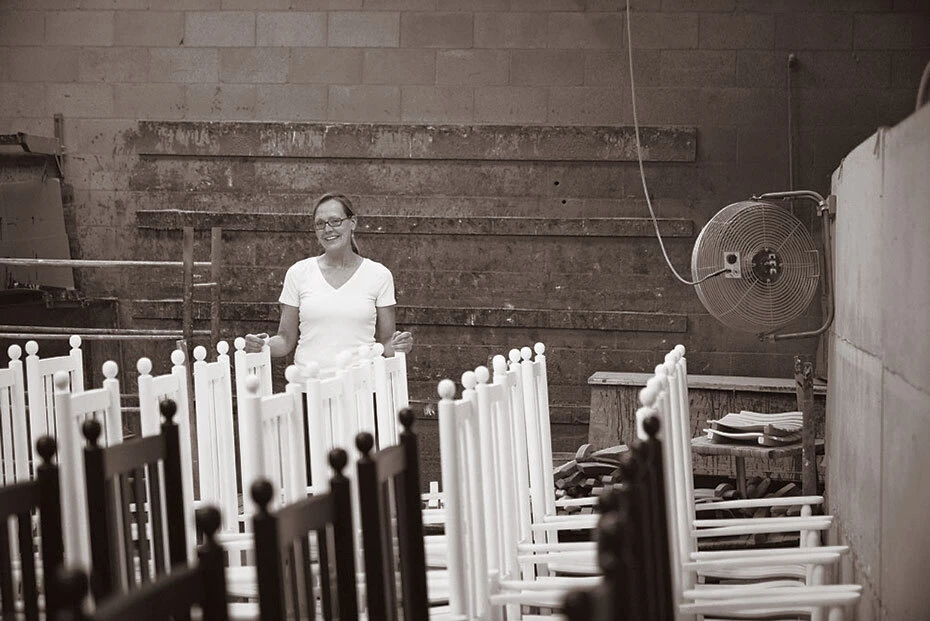
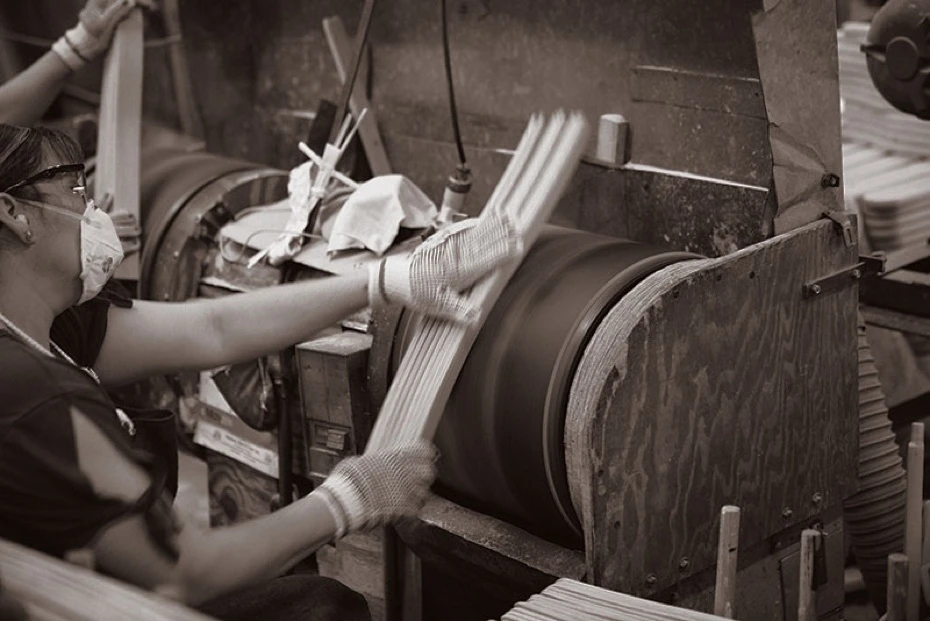
Traditional furniture production is not a choice between machinery and handwork. The process uses both. Sawmill equipment, turning equipment, boring machinery, clamps, and finishing systems help create consistency. Craftspeople still evaluate the wood, handle the parts, assemble the frame, complete the seat, and guide the piece through production.
That is why Troutman describes the process in human terms: more than 26 pairs of hands transform the solid wood into comfortable furniture.
Construction Varies by Model
The Core Methods Stay Consistent, but the Details Change
A ladder back dining chair, a cane rocker, a round top stool, and the Official Kennedy Rocker do not follow an identical final sequence.
Shaped and Slatted Seats
Many chairs and rockers use solid or slatted seats shaped to create a more comfortable sitting surface.
Explore dining chairsSeagrass, Paper Cord, and Cane
Selected models add woven seating completed by skilled hands, introducing natural texture and a different final production stage.
Explore rocking chairsRunner Assembly Depends on the Model
Many rockers require the included runners to be attached after delivery, while selected models such as the Official Kennedy Rocker arrive fully assembled.
Read the rocker guideWhat Made to Order Means for You
Your Choices Become Part of the Production Plan
Select the Product
Choose the model and size that fit the person, room, table, counter, or intended use.
Choose Available Options
Finish, seat material, contrast choices, and other selectors vary by product.
Allow Production Time
Please allow approximately 3 to 12 weeks for production and delivery of made to order furniture.
Prepare for Delivery
Review the product page for assembly information and inspect the furniture when it arrives.
Common Questions
Made to Order Furniture FAQ
Does Furniture Made In USA operate the factory?
No. FurnitureMadeInUSA.com is a North Carolina retailer. The Troutman furniture in this guide is manufactured by Troutman Chair Company in Troutman, North Carolina. We help customers compare products, choose available options, place orders, and receive their furniture.
Is every piece built exactly the same way?
No. The core solid wood and joinery methods are shared across many models, but seating material, steam bending, arms, hardware, reinforcement, rocker runners, and final assembly vary by product.
Why does the process avoid glue in the wooden frame?
Troutman uses swelled joint construction and interlocking joinery. Moisture differences and joint geometry create tight wooden connections without relying on glue in the frame.
Why does made to order furniture take several weeks?
The furniture must move through production, finishing, order preparation, and delivery. Current product pages advise allowing approximately 3 to 12 weeks for production and delivery.
Will my rocker require assembly?
Assembly depends on the model. Many rockers require the included runners to be attached using the supplied instructions and nails. The Official Kennedy Rocker arrives fully assembled. Always follow the assembly information on the individual product page.
Furniture with a Story Behind It
Choose a Piece Made with North Carolina Skill
Explore solid wood chairs, rockers, stools, tables, and children's furniture made through a tradition that connects local material, specialized equipment, proven joinery, and skilled American hands.